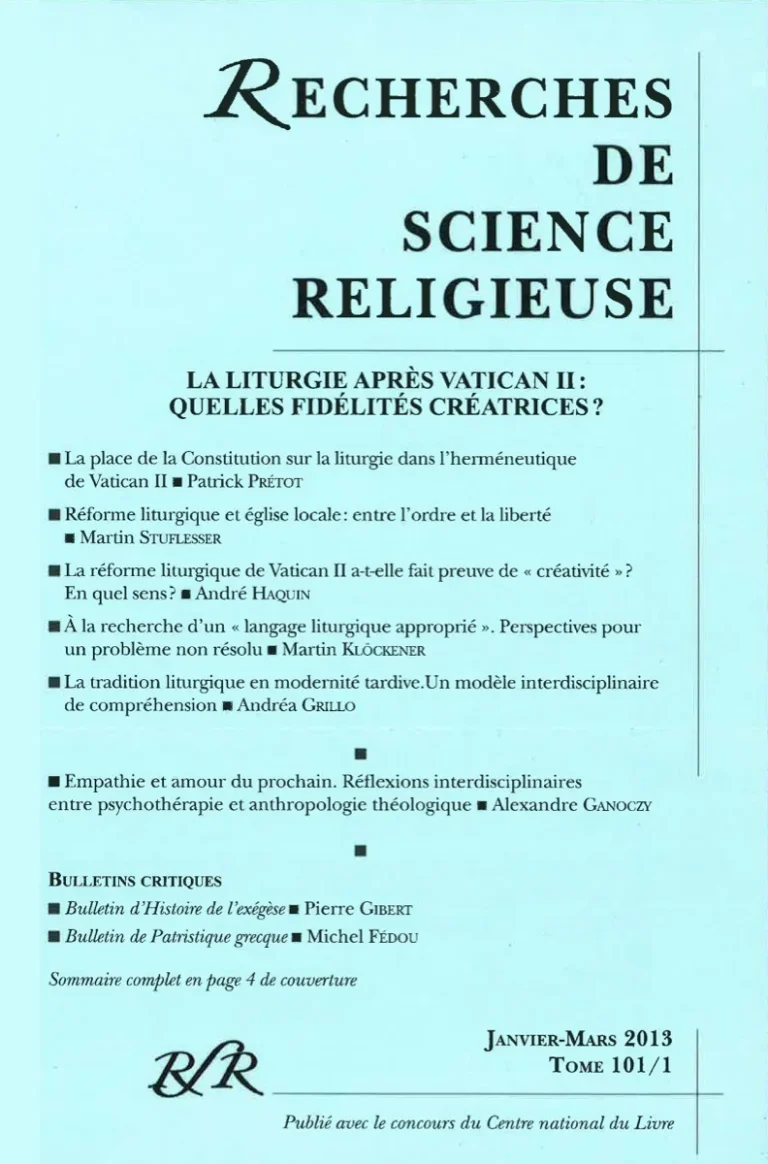
Réforme liturgique et église locale
Entre l’ordre et la liberté
Martin STUFLESSER
L’article analyse la question de la réforme liturgique après Vatican II au niveau de l’Église locale, en tentant de définir la juste relation entre l’ordre (liturgique) et la liberté et la la possibilité de procéder à des adaptations concrètes en fonction de la situation pastorale. Le conflit autour du nouveau rituel allemand des obsèques, publié en 2009, sert d’entrée en matière. Dans un deuxième temps, l’article présente un éventail des résultats d’une enquête qualitative sur la liturgie de Carême et de Pâques, pour dresser ensuite un bilan théologique s’intéressant à la question de fond qui se tient à l’arrière-plan de tout ce débat : la condition de possibilité de penser de façon appropriée le primat de l’action de Dieu dans la liturgie, qui, seule, porte et rend possible la réponse de l’homme.
This article will analyze the issue of liturgical reform after Vatican II at the level of local churches, endeavouring to define the proper relation between order (liturgical) and freedom and the possibility of concrete adaptation in relation to the pastoral context. The conflict surrounding the new German funeral ritual of 2009 is an apt introduction to the subject. In a second section, the article will present a broad sampling of the results of a qualitative inquiry into Lenten and Easter liturgy, then a theological overview of the basic issue behind this debate : the possibility of envisioning the primacy of God’s action in liturgy, the only factor that truly enables human response.
Sommaire
Bulletins critiques
ce numéro
à la revue