L’état de la théologie africaine face à la crise de l’inculturation
Jean-Luc ENYEGUE
Cet article examine l’état actuel des théologies africaines à la lumière de la « crise de l’inculturation ». Il soutient que l’inculturation, longtemps considérée comme pierre angulaire de l’identité théologique africaine, devient insuffisante si elle se limite à un simple retour aux traditions ancestrales. Les théologies africaines contemporaines privilégient désormais la synodalité, les méthodes autobiographiques et narratives, les perspectives féministes, les approches socio-pédagogiques et une spiritualité interculturelle. Ces évolutions traduisent un engagement dynamique face à la mondialisation, à la sécularisation, à la concurrence pentecôtiste et interreligieuse, ainsi qu’aux réalités sociales pressantes. Loin d’un déclin, cette crise annonce un renouveau : l’émergence d’un pluralisme théologique africain inclusif, contextuel, spirituel et ouvert au monde.
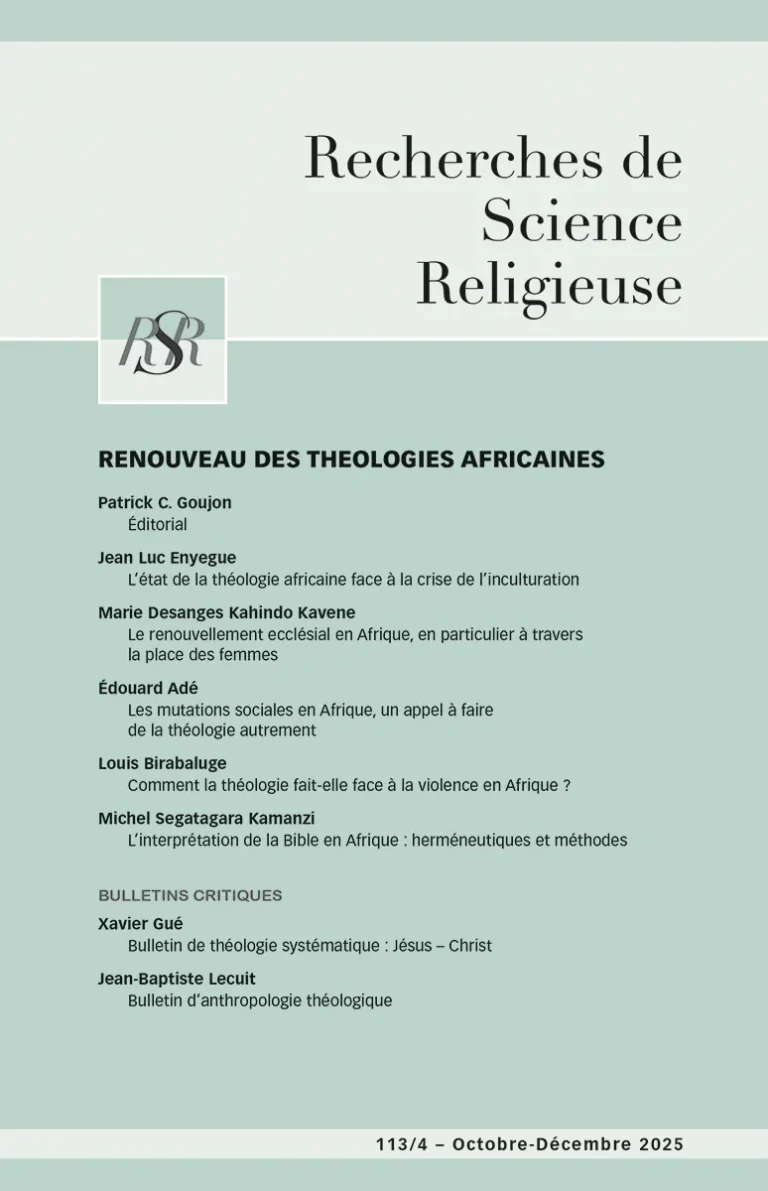
ce numéro
à la revue